

When selecting materials for CNC machined components, brass and stainless steel are two of the most frequently compared options. Both offer good corrosion resistance and are widely used across industries, but they differ significantly in strength, machinability, conductivity, appearance, and long-term performance.
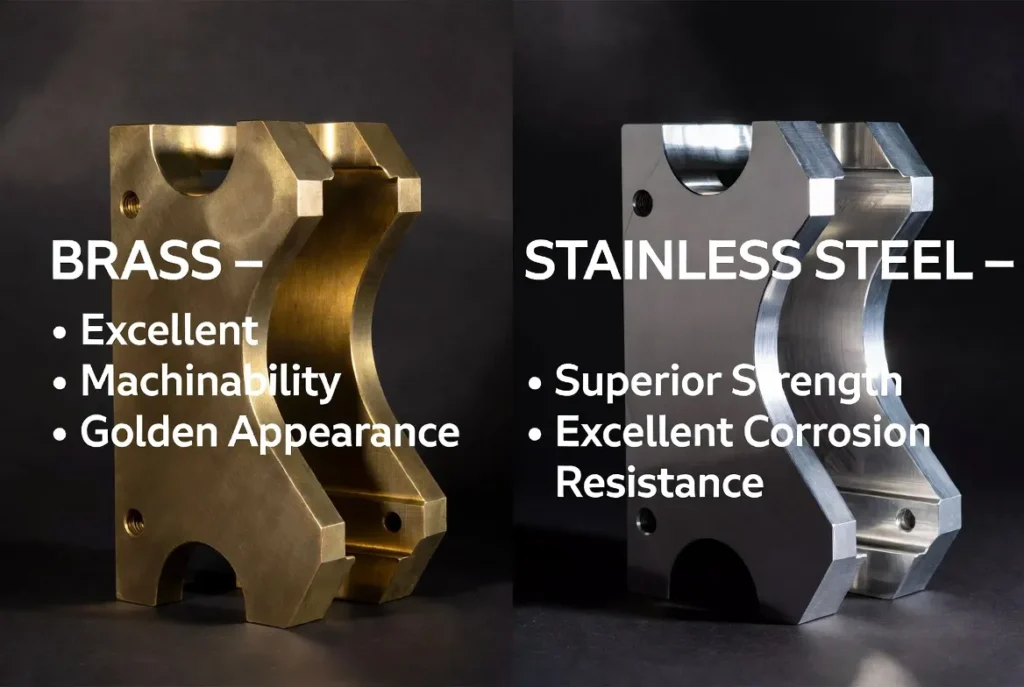
Brass, a copper-zinc alloy, is prized for its excellent machinability, attractive golden color, and high thermal/electrical conductivity. Stainless steel, an iron-chromium alloy, excels in strength, durability, and resistance to harsh environments.
This guide provides a clear, practical comparison to help you choose the right material for your CNC projects.
What Is Brass?
Brass is primarily an alloy of copper (typically 55–95%) and zinc (5–45%). Additional elements such as lead, tin, or iron may be added to improve machinability or corrosion resistance. Free-machining grades like C36000 are especially popular in CNC work.
Key characteristics include good formability, excellent chip control during machining, moderate strength, and a warm golden appearance that develops a natural patina over time.
What Is Stainless Steel?
Stainless steel is an iron-based alloy containing at least 10.5% chromium, which forms a self-healing passive oxide layer that protects against corrosion. Common grades for CNC parts include 304 (general purpose) and 316 (enhanced corrosion resistance with molybdenum).
It offers higher mechanical strength, excellent durability, and superior performance in aggressive environments compared with brass.
Key Properties Comparison
| Property | Brass (e.g., C36000) | Stainless Steel (e.g., 304/316) |
|---|---|---|
| Composition | Copper + Zinc | Iron + Chromium (+ Nickel, Mo) |
| Tensile Strength | 300–500 MPa | 500–900+ MPa |
| Yield Strength | 100–310 MPa | 200–300+ MPa (higher when cold worked) |
| Hardness | Lower (softer) | Higher |
| Machinability | Excellent (benchmark 100%) | Moderate to difficult |
| Thermal Conductivity | High (~100–120 W/m·K) | Low (~15–16 W/m·K) |
| Electrical Conductivity | High (15–30% IACS) | Low |
| Corrosion Resistance | Good in mild environments | Excellent (especially 316) |
| Appearance | Golden / warm tone | Silver / modern |
| Density | ~8.5 g/cm³ | ~8.0 g/cm³ |
Pro Tip: Brass is the clear winner for high-volume precision machining where speed, surface finish, and cost efficiency matter. Stainless steel is preferred when strength and long-term corrosion resistance are critical.
Strength and Durability
Stainless steel generally provides higher tensile and yield strength, making it better suited for load-bearing structural parts, fasteners, and components under high stress. Brass has moderate strength and is more prone to deformation under heavy loads, but it performs well in low-to-moderate stress applications such as fittings and valves.
Stainless steel also offers superior wear and impact resistance in demanding conditions.
Corrosion Resistance
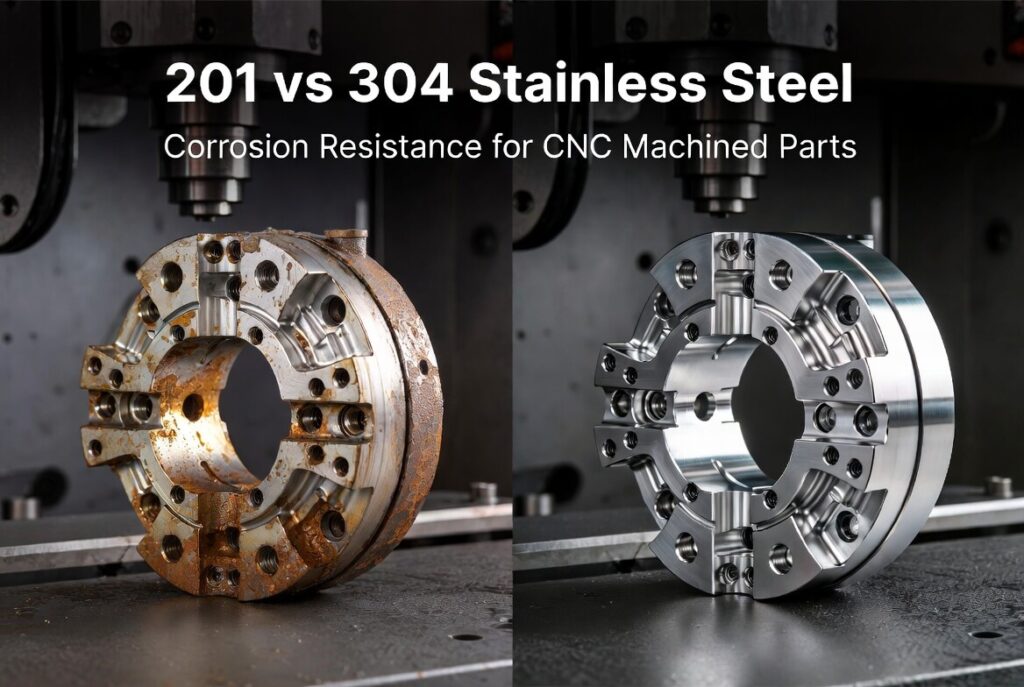
- Brass performs well in freshwater, indoor, and mild atmospheric environments. However, it can suffer from dezincification (selective leaching of zinc) in aggressive saltwater, chlorinated water, or certain chemical environments unless special dezincification-resistant (DZR) grades are used.
- Stainless Steel forms a protective chromium oxide layer. Grade 304 is excellent for general use, while Grade 316 (with molybdenum) provides superior resistance in marine, chloride-rich, and chemical environments.
For outdoor, marine, food processing, or chemical exposure, stainless steel is usually the safer long-term choice.
Machinability for CNC Operations
This is one of the biggest practical differences:
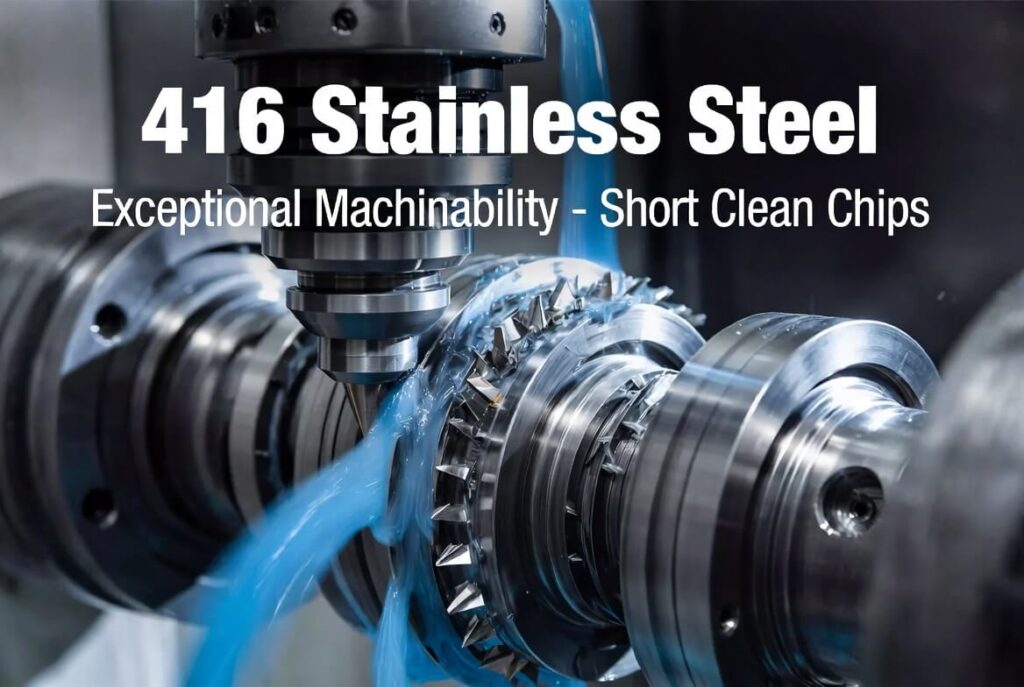
- Brass (especially free-machining grades) produces short, clean chips, allows high cutting speeds and feeds, and delivers excellent surface finishes with low tool wear. It is ideal for complex geometries and high-volume production.
- Stainless Steel tends to work-harden, generates more heat, and produces stringy chips. It requires slower speeds, sharp carbide tooling, and generous coolant, resulting in higher machining costs and longer cycle times.
In CNC shops, brass often significantly reduces cycle time and tooling costs compared with stainless steel.
Conductivity and Thermal Performance
Brass has much higher thermal and electrical conductivity than stainless steel. This makes brass preferred for heat exchangers, radiators, electrical connectors, and components where efficient heat or current transfer is needed. Stainless steel’s lower conductivity can be an advantage in applications requiring thermal insulation or stability.
Appearance and Aesthetics
- Brass offers a classic warm, golden color that can be polished to a bright finish or allowed to develop a natural patina.
- Stainless Steel provides a modern, clean silver appearance that stays bright with minimal maintenance and is easy to keep hygienic.
Design preference often influences the final material choice for visible components.
Cost Considerations
Raw material cost for brass is often higher due to copper content. However, brass is typically more cost-effective overall for CNC production because of faster machining speeds, longer tool life, and shorter cycle times. Stainless steel has a higher total machining cost but can offer better long-term value in corrosive environments by reducing maintenance and replacement needs.
Always evaluate total cost of ownership rather than material price alone.
Common Applications
Choose Brass when you need:
- Superior machinability and high-volume production (valves, fittings, gears, nozzles, connectors)
- High thermal or electrical conductivity
- Attractive golden appearance (decorative hardware, architectural accents, musical instruments)
- Good performance in mild or freshwater environments
Choose Stainless Steel when you need:
- Higher strength and structural integrity (shafts, brackets, load-bearing parts)
- Superior corrosion resistance in harsh, marine, chemical, or outdoor conditions
- Hygienic, easy-to-clean surfaces (food processing, medical, pharmaceutical equipment)
- Long-term durability with minimal maintenance
How to Choose Between Brass and Stainless Steel
Ask these questions:
- Does the part require high strength or resistance to heavy loads?
- Will it be exposed to moisture, salt, chemicals, or outdoor conditions?
- Is excellent machinability and fast production a priority?
- Does appearance (golden vs silver) matter?
- What is the expected service life and maintenance budget?
For high-precision, high-volume, or decorative parts in mild environments → Brass is often the better choice. For strength, durability, and harsh environments → Stainless Steel is usually preferred.
Ready to machine your next project in brass or stainless steel? Our CNC team specializes in both materials and can help you select the optimal alloy, provide DFM feedback, and deliver precision parts with the right surface finish. Contact us today for a free quote or technical consultation. Let’s create high-quality components that perfectly match your performance and budget requirements.
FAQ
What is the main difference between brass and stainless steel? Brass is a copper-zinc alloy with excellent machinability and conductivity, while stainless steel is an iron-chromium alloy known for higher strength and superior corrosion resistance.
Which is stronger — brass or stainless steel? Stainless steel generally has higher tensile and yield strength, making it better for load-bearing applications.
Which material machines better on CNC equipment? Brass has significantly better machinability, producing cleaner chips and allowing higher speeds with less tool wear.
Does brass corrode more easily than stainless steel? Brass performs well in mild environments but can suffer dezincification in aggressive saltwater or chemical conditions. Stainless steel (especially 316) offers better overall corrosion resistance.
Which is more expensive? Stainless steel often has higher total machining costs, while brass can be more economical for production due to faster cycle times, even if raw material prices are comparable or higher.
Can brass and stainless steel be used together? Yes, but galvanic corrosion should be considered in wet or electrolytic environments. Proper design or insulation can prevent issues.