
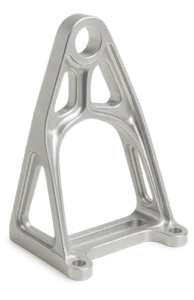


Nickel Plating Services
Nickel plating delivers excellent corrosion resistance, wear protection, and a uniform bright or semi-bright finish. Suitable for functional and decorative applications across a wide range of base metals.
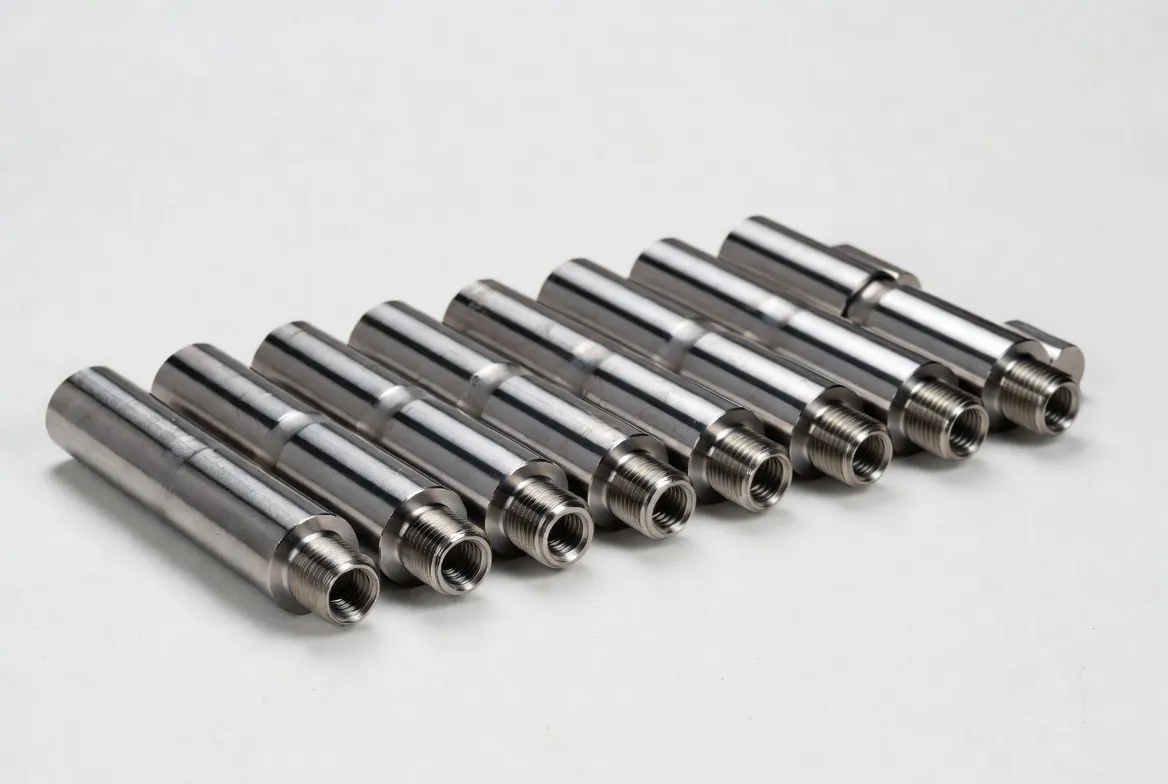
What Is Nickel Plating?
Nickel plating is an electroplating process in which a thin layer of nickel is deposited onto a conductive substrate through an electrolytic reaction. The part is immersed in a nickel salt solution and connected as the cathode, while an electric current drives nickel ions to form a uniform coating on the surface.
The thickness, appearance, and properties of the nickel layer can be controlled by adjusting current density, bath composition, temperature, and process time. Nickel plating is widely used for corrosion protection, wear resistance, decorative finishing, and as an underlayer for subsequent coatings such as chromium or gold.
Advantages of Nickel Plating
- Excellent corrosion and oxidation resistance
- Improved wear and abrasion resistance
- Uniform coverage on complex geometries
- Attractive bright or semi-bright appearance
- Enhanced surface hardness
- Good adhesion to many base metals
- Improved solderability in certain applications
- Cost-effective protective and decorative solution
Nickel Plating FAQs
How long does nickel plating last?
The service life depends on plating thickness, environmental exposure, and whether a topcoat or sealant is applied. In normal indoor or mildly corrosive conditions, properly applied nickel plating can last for many years.
Does nickel plating tarnish?
Nickel can develop a slight dullness or tarnish over time, especially in humid or polluted environments. Regular cleaning with mild, non-abrasive methods helps maintain its appearance.
Can nickel plating crack or peel?
When the substrate is properly prepared and process parameters are controlled, nickel plating exhibits strong adhesion and is resistant to cracking or peeling under normal use.
How thick can nickel plating be applied?
Thickness can range from a few micrometers for decorative purposes to much thicker functional coatings, depending on the application requirements and industry specifications.
What base materials are suitable for nickel plating?
Nickel plating is commonly applied to steel, copper, brass, and certain aluminum alloys (with appropriate pretreatment). Material selection and surface preparation are critical for achieving reliable results.
Other Surface Finishing Processes
An electrochemical process that creates a durable, corrosion-resistant oxide layer on aluminum, enhancing hardness, wear resistance, and color options.
A surface finishing method that propels fine spherical media to clean, deburr, and create a uniform matte texture without significant material removal.
A chemical conversion coating that forms a thin black magnetite layer on ferrous metals, providing mild corrosion resistance and a non-reflective finish with minimal dimensional change.
A thin diamond-like carbon film applied via PVD or CVD that delivers exceptional hardness, ultra-low friction, and superior wear resistance.
An electrochemical process that removes a controlled layer of metal to produce a smooth, bright, and highly clean surface with improved corrosion resistance.
A controlled heating and cooling process used to modify the microstructure of metals, improving hardness, strength, toughness, and overall mechanical performance.
A dry finishing process in which electrostatically charged powder is applied and heat-cured to form a durable, uniform, and environmentally friendly protective coating.
A vacuum-based thin-film deposition technique that produces hard, wear-resistant, and often decorative coatings with excellent adhesion and minimal thickness.
An electroplating process that applies a sacrificial zinc layer to steel and iron parts, offering cost-effective corrosion protection through galvanic action.