

Heat Treatment Services
Heat treatment optimizes the mechanical properties of metals through controlled heating and cooling. Improve hardness, strength, toughness, wear resistance, and dimensional stability for high-performance components.
What Is Heat Treatment?
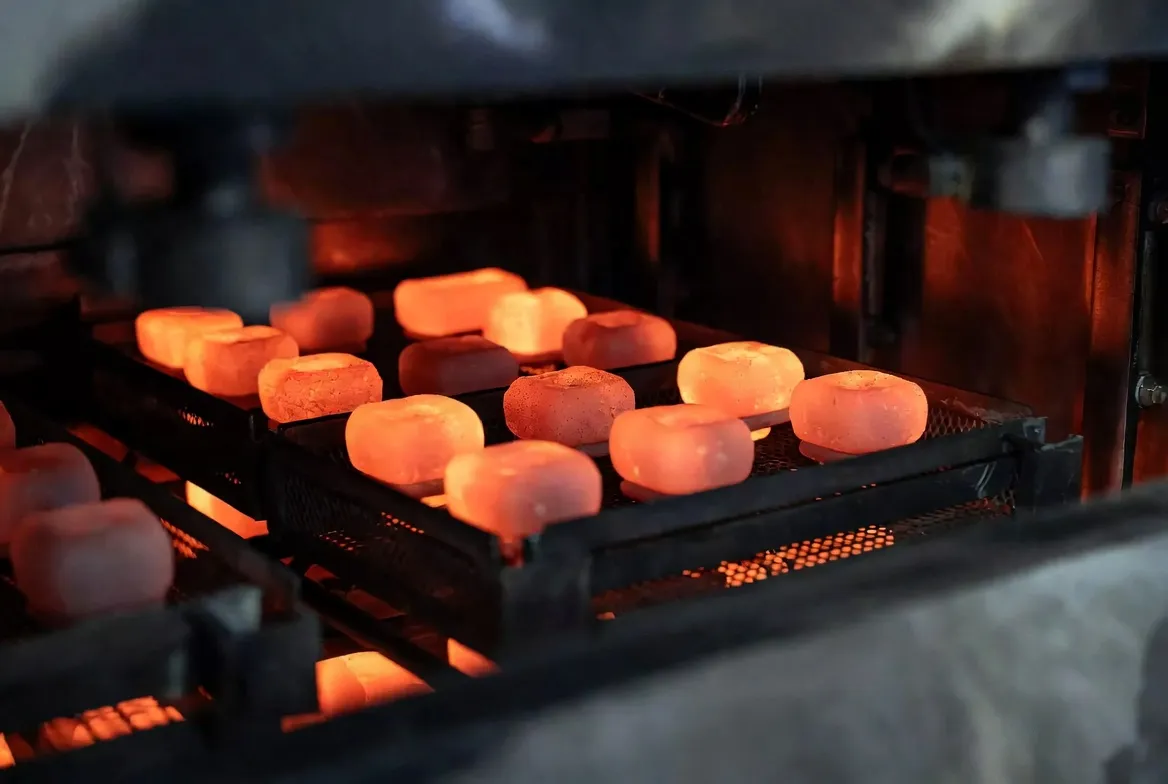
Heat treatment is a controlled thermal process used to alter the physical and mechanical properties of metals and alloys. It typically involves heating the material to a defined temperature, holding it for a specific time, and then cooling it at a controlled rate.
Common processes include annealing (to soften material and relieve stress), normalizing (to refine grain structure), quenching (to increase hardness), tempering (to reduce brittleness while retaining strength), and case hardening (to create a hard surface layer while maintaining a tougher core). These treatments are essential for producing reliable components used in tooling, automotive, aerospace, machinery, and other demanding applications.
Advantages of Heat Treatment
- Increased hardness and wear resistance
- Improved tensile and yield strength
- Enhanced toughness and impact resistance
- Effective stress relief
- Better dimensional stability
- Refined microstructure for more consistent properties
- Ability to customize material performance for specific applications
- Extended service life of critical components
Heat Treatment FAQs
What are the main heat treatment processes?
The most common processes are annealing, normalizing, quenching, tempering, and case hardening. Each serves a different purpose, ranging from softening material and relieving stress to maximizing hardness or creating a hard surface layer.
What are the two primary stages of heat treatment?
Heat treatment consists of controlled heating (to change the microstructure) followed by controlled cooling (which determines the final mechanical properties). The cooling rate is often the most critical factor in achieving the desired result.
What is the most widely used heat treatment process?
Annealing is one of the most common treatments. It softens the material, relieves internal stresses, improves ductility, and enhances machinability through slow cooling after heating.
How effective is heat treatment?
When properly controlled, heat treatment can dramatically improve hardness, strength, toughness, and wear resistance. The effectiveness depends on material selection, precise temperature control, and correct cooling methods.
What are common heat treatment problems?
Typical issues include distortion, quench cracking, decarburization, uneven hardness, and incomplete transformation. These can usually be minimized through proper process design, fixturing, and strict parameter control.
Other Surface Finishing Processes
An electrochemical process that creates a durable, corrosion-resistant oxide layer on aluminum, enhancing hardness, wear resistance, and color options.
A surface finishing method that propels fine spherical media to clean, deburr, and create a uniform matte texture without significant material removal.
A chemical conversion coating that forms a thin black magnetite layer on ferrous metals, providing mild corrosion resistance and a non-reflective finish with minimal dimensional change.
A thin diamond-like carbon film applied via PVD or CVD that delivers exceptional hardness, ultra-low friction, and superior wear resistance.
An electrochemical process that removes a controlled layer of metal to produce a smooth, bright, and highly clean surface with improved corrosion resistance.
An electroplating process that deposits a uniform nickel layer to enhance corrosion resistance, wear protection, and surface appearance.
A dry finishing process in which electrostatically charged powder is applied and heat-cured to form a durable, uniform, and environmentally friendly protective coating.
A vacuum-based thin-film deposition technique that produces hard, wear-resistant, and often decorative coatings with excellent adhesion and minimal thickness.
An electroplating process that applies a sacrificial zinc layer to steel and iron parts, offering cost-effective corrosion protection through galvanic action.