
PVD Coating Services
PVD coating provides exceptional hardness, wear resistance, and a wide range of decorative finishes. Ideal for components that require both high performance and refined aesthetics.
What Is PVD Coating?
Physical Vapor Deposition (PVD) is a vacuum-based thin-film coating process in which solid source materials are vaporized and then condensed onto the substrate surface. Common techniques include sputtering and evaporation.
Typical PVD coatings include titanium nitride (TiN), chromium nitride (CrN), titanium aluminum nitride (TiAlN), and other metal nitrides or carbides. These coatings are extremely thin yet provide high hardness, excellent wear resistance, good temperature stability, and attractive decorative colors. PVD is widely used in cutting tools, automotive components, medical devices, electronics, watches, and high-end consumer products.
Advantages of PVD Coating
- Extremely high surface hardness
- Excellent wear and abrasion resistance
- Improved corrosion protection
- Wide range of decorative colors and finishes
- High temperature stability
- Thin coating with minimal dimensional impact
- Strong adhesion to the substrate
- Suitable for both functional and aesthetic applications
PVD Coating FAQs
Is PVD coating long-lasting?
Yes. PVD coatings are known for their excellent durability and can significantly extend the service life of components under wear and corrosive conditions.
Is PVD coating expensive?
PVD generally has a higher initial cost than many conventional finishes due to the specialized vacuum equipment and process control required. However, the extended part life and reduced maintenance often justify the investment.
Is PVD coating scratch-resistant?
Yes. Most PVD coatings offer high hardness and strong resistance to scratching and abrasion compared to uncoated surfaces or many traditional coatings.
Can PVD coating be repaired?
Repairing a damaged PVD coating is difficult. In most cases, stripping and recoating the part is more practical and reliable than attempting localized repairs.
What colors are available with PVD coating?
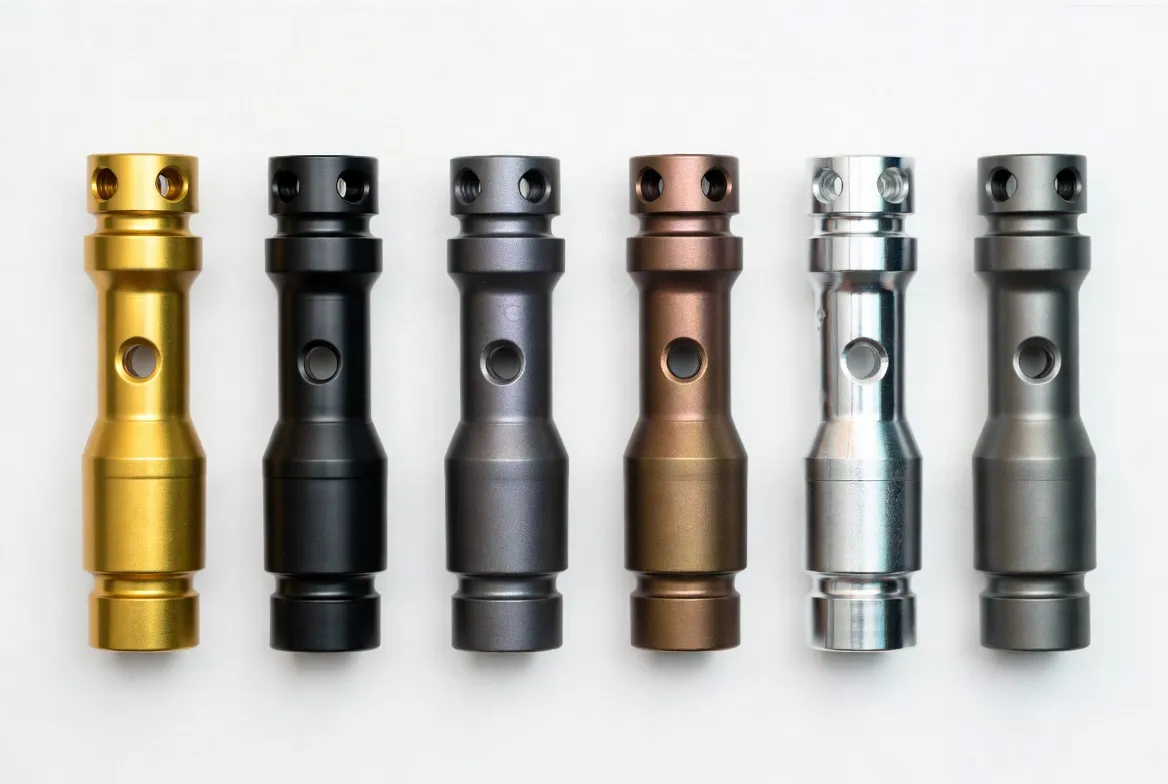
PVD coatings are available in a variety of colors, including gold, rose gold, black, gray, bronze, and other tones, depending on the coating material and process parameters.
Other Surface Finishing Processes
An electrochemical process that creates a durable, corrosion-resistant oxide layer on aluminum, enhancing hardness, wear resistance, and color options.
A surface finishing method that propels fine spherical media to clean, deburr, and create a uniform matte texture without significant material removal.
A chemical conversion coating that forms a thin black magnetite layer on ferrous metals, providing mild corrosion resistance and a non-reflective finish with minimal dimensional change.
A thin diamond-like carbon film applied via PVD or CVD that delivers exceptional hardness, ultra-low friction, and superior wear resistance.
An electrochemical process that removes a controlled layer of metal to produce a smooth, bright, and highly clean surface with improved corrosion resistance.
A controlled heating and cooling process used to modify the microstructure of metals, improving hardness, strength, toughness, and overall mechanical performance.
An electroplating process that deposits a uniform nickel layer to enhance corrosion resistance, wear protection, and surface appearance.
A dry finishing process in which electrostatically charged powder is applied and heat-cured to form a durable, uniform, and environmentally friendly protective coating.
An electroplating process that applies a sacrificial zinc layer to steel and iron parts, offering cost-effective corrosion protection through galvanic action.