
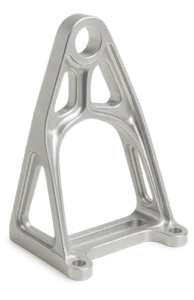


Black Oxide Coating
Black oxide provides a durable matte black finish with minimal dimensional change. Ideal for steel and ferrous parts that require corrosion resistance, reduced glare, and a clean professional appearance.
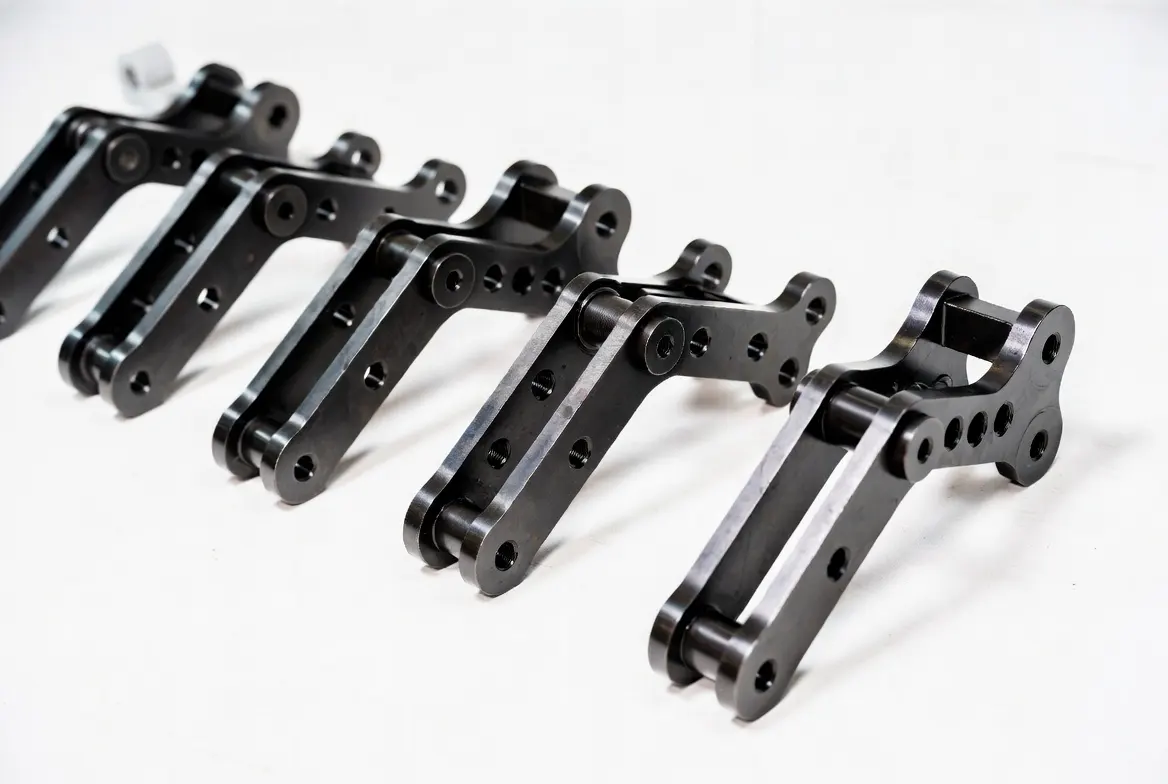
What Is Black Oxide?
Black oxide (also called blackening) is a conversion coating formed through a chemical reaction between the metal surface and an oxidizing solution. For steel and iron, the process converts the outer layer into magnetite (Fe₃O₄), creating a thin, integrated black film.
Parts are first thoroughly cleaned, then immersed in a heated alkaline bath containing oxidizing salts. After rinsing, a supplementary sealant such as oil or wax is typically applied to maximize corrosion resistance. The resulting layer is extremely thin (usually 0.5–2 μm), making black oxide one of the best options for precision components that cannot tolerate dimensional growth.
Advantages of Black Oxide
- Minimal dimensional change (ideal for tight-tolerance parts)
- Uniform matte black appearance with low light reflection
- Mild corrosion resistance (greatly improved when sealed with oil or wax)
- Improved surface lubricity and reduced galling
- Cost-effective compared to plating or painting
- No risk of chipping, peeling, or flaking
- Suitable for complex shapes and internal features
Black Oxide FAQs
Does black oxide prevent rust?
Black oxide alone provides only mild corrosion resistance. When properly sealed with oil, wax, or another post-treatment, its protective performance is significantly improved. Regular re-oiling is recommended for parts exposed to moisture.
How much thickness does black oxide add?
The conversion layer is typically 0.5–2 micrometers thick—virtually negligible for most precision applications. It is one of the few finishes that preserves tight tolerances.
What materials can be black oxided?
Black oxide is most effective on carbon steel, alloy steel, and tool steel. Stainless steel and copper can also be treated, but they require specialized process parameters.
Is black oxide a coating or a conversion process?
It is a conversion process. The surface of the metal itself is chemically transformed into magnetite rather than having a separate layer deposited on top. As a result, it will not chip or peel.
Can black oxide be applied to precision CNC parts?
Yes. Because the dimensional change is minimal, black oxide is widely used on tight-tolerance CNC machined components such as gears, fasteners, shafts, fixtures, and tooling.
Other Surface Finishing Processes
An electrochemical process that creates a durable, corrosion-resistant oxide layer on aluminum, enhancing hardness, wear resistance, and color options.
A surface finishing method that propels fine spherical media to clean, deburr, and create a uniform matte texture without significant material removal.
A thin diamond-like carbon film applied via PVD or CVD that delivers exceptional hardness, ultra-low friction, and superior wear resistance.
An electrochemical process that removes a controlled layer of metal to produce a smooth, bright, and highly clean surface with improved corrosion resistance.
A controlled heating and cooling process used to modify the microstructure of metals, improving hardness, strength, toughness, and overall mechanical performance.
An electroplating process that deposits a uniform nickel layer to enhance corrosion resistance, wear protection, and surface appearance.
A dry finishing process in which electrostatically charged powder is applied and heat-cured to form a durable, uniform, and environmentally friendly protective coating.
A vacuum-based thin-film deposition technique that produces hard, wear-resistant, and often decorative coatings with excellent adhesion and minimal thickness.
An electroplating process that applies a sacrificial zinc layer to steel and iron parts, offering cost-effective corrosion protection through galvanic action.