

Zinc Plating Service
Zinc plating provides reliable corrosion protection through sacrificial action, offering a cost-effective and widely applicable finish for steel and iron components.
What Is Zinc Plating?
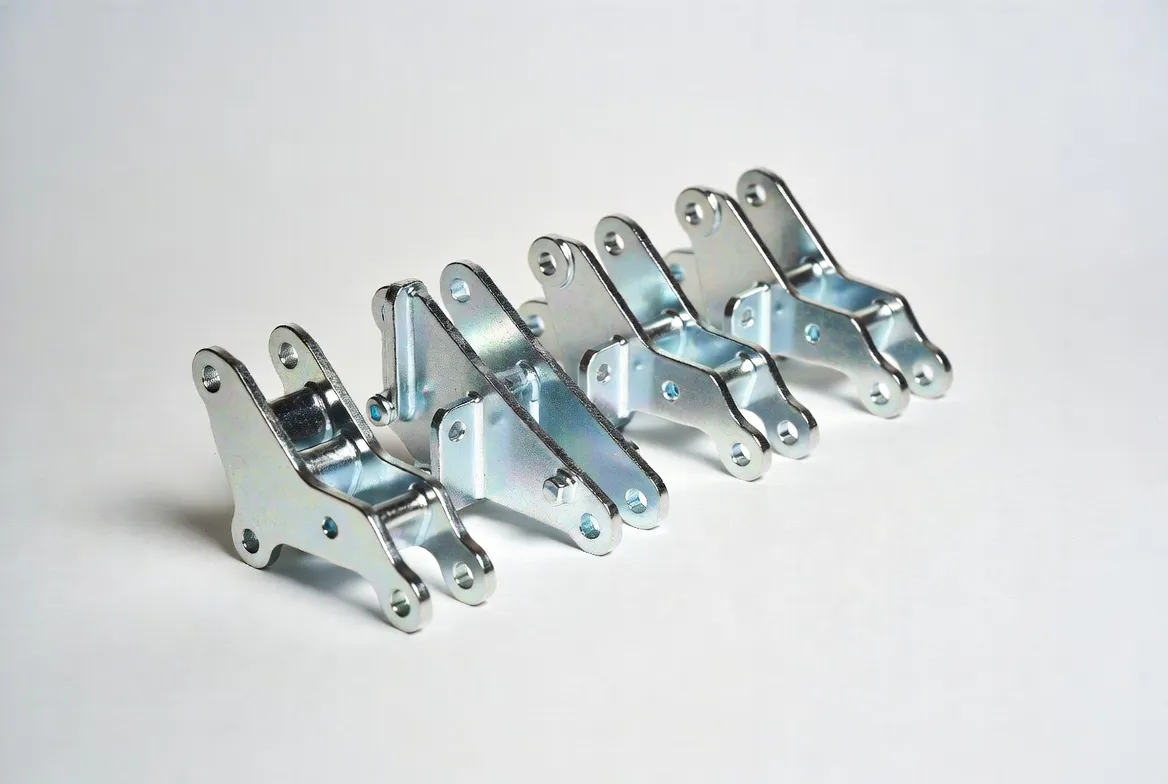
Zinc plating is an electroplating process in which a metal part (typically steel or iron) is immersed in a zinc salt solution and connected as the cathode. An electric current causes zinc ions to deposit onto the surface, forming a protective metallic layer.
The coating provides corrosion resistance primarily through sacrificial protection—zinc corrodes before the base metal. Different bath chemistries (acid or alkaline) and plating methods (rack or barrel) can be selected based on part geometry, volume, and desired appearance. Zinc plating is one of the most widely used and cost-effective corrosion protection finishes in manufacturing.
Advantages of Zinc Plating
- Effective sacrificial corrosion protection
- Cost-efficient compared to many alternative coatings
- Good coverage on complex shapes
- Attractive bright or matte appearance options
- Compatible with a wide range of steel and iron parts
- Can be combined with chromate or other post-treatments for enhanced performance
- Relatively fast and scalable process
- Improves overall durability and reduces maintenance needs
Zinc Plating FAQs
How long does zinc plating last?
Service life depends on coating thickness, environmental exposure, and whether post-treatments are applied. Indoors, zinc plating can last many years. Outdoor or corrosive environments will shorten lifespan unless thicker coatings or additional protection are used.
What are the limitations of zinc plating?
Zinc can corrode more quickly in highly acidic or strongly alkaline environments. It may also develop white rust if exposed to moisture before proper drying or sealing. Performance is generally lower than more advanced coatings in severe outdoor or marine conditions.
Is zinc plating suitable for outdoor use?
It can provide adequate protection in mild to moderate outdoor environments. For harsher conditions, thicker deposits, chromate post-treatments, or alternative coatings are often recommended.
What can damage or remove zinc plating?
Strong acids (such as hydrochloric or sulfuric acid) will dissolve zinc plating. Harsh chemical cleaners should be avoided. Mechanical abrasion can also wear through the relatively thin coating over time.
Can zinc-plated parts be used in contact with concrete?
Yes, with proper coating thickness. Moisture and the alkaline nature of concrete can accelerate zinc corrosion, so adequate thickness and, where possible, additional protection should be considered.
Other Surface Finishing Processes
An electrochemical process that creates a durable, corrosion-resistant oxide layer on aluminum, enhancing hardness, wear resistance, and color options.
A surface finishing method that propels fine spherical media to clean, deburr, and create a uniform matte texture without significant material removal.
A chemical conversion coating that forms a thin black magnetite layer on ferrous metals, providing mild corrosion resistance and a non-reflective finish with minimal dimensional change.
A thin diamond-like carbon film applied via PVD or CVD that delivers exceptional hardness, ultra-low friction, and superior wear resistance.
An electrochemical process that removes a controlled layer of metal to produce a smooth, bright, and highly clean surface with improved corrosion resistance.
A controlled heating and cooling process used to modify the microstructure of metals, improving hardness, strength, toughness, and overall mechanical performance.
An electroplating process that deposits a uniform nickel layer to enhance corrosion resistance, wear protection, and surface appearance.
A dry finishing process in which electrostatically charged powder is applied and heat-cured to form a durable, uniform, and environmentally friendly protective coating.
A vacuum-based thin-film deposition technique that produces hard, wear-resistant, and often decorative coatings with excellent adhesion and minimal thickness.