
Anodizing Services
Anodizing is an electrochemical process that significantly improves the corrosion resistance, durability, and appearance of metals—especially aluminum.
What Is Anodizing?
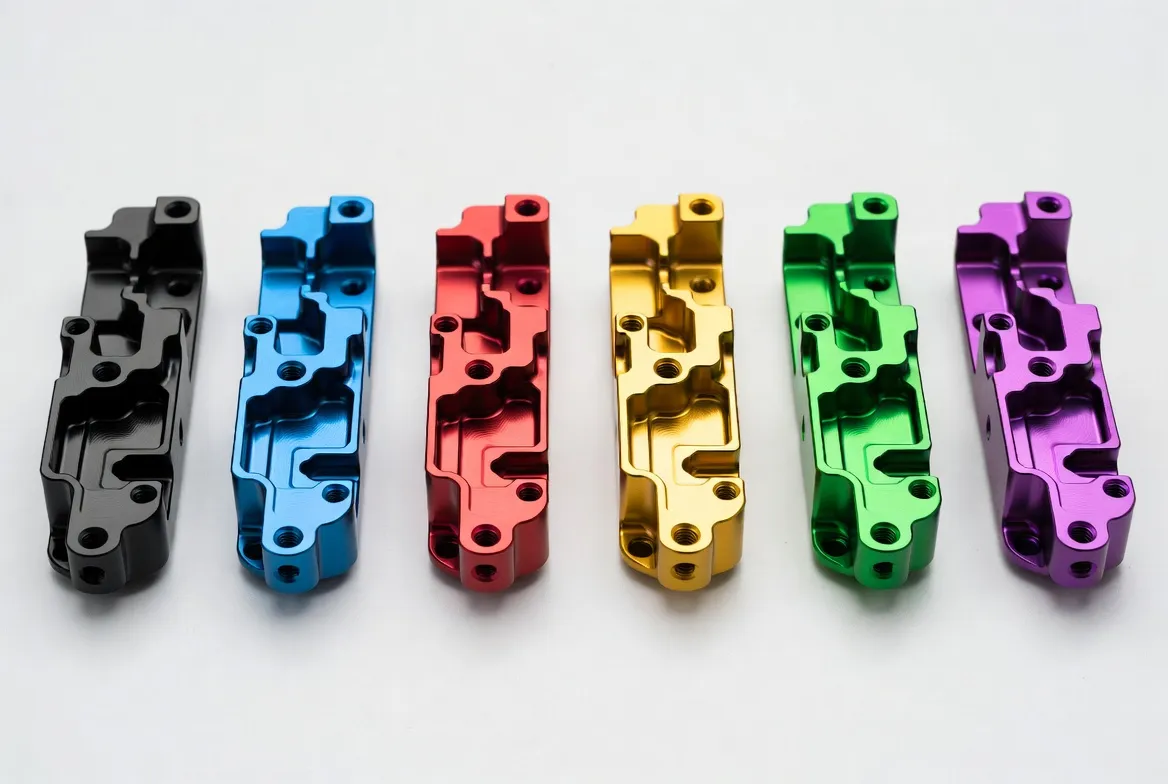
Anodizing is an electrochemical process that creates a durable, corrosion-resistant oxide layer on the surface of metals, most commonly aluminum. The part is thoroughly cleaned, immersed in an electrolyte bath, and subjected to an electric current. This grows a controlled oxide film that increases hardness and corrosion protection. Dyes can be introduced for decorative color finishes, followed by a sealing step that locks in the layer for long-term performance.
Advantages of Anodizing
- Excellent corrosion resistance
- Improved durability and wear resistance
- Increased surface hardness
- Better adhesion for paints and adhesives
- Enhanced aesthetics with stable colors
- Electrically non-conductive surface
- Environmentally friendly process
- Long-lasting, low-maintenance finish
Anodizing FAQs
What metals cannot be anodized?
Aluminum and its alloys are the most common materials for anodizing. Iron and steel generally cannot be anodized effectively because they do not form a stable, protective oxide layer under the process conditions.
We usually reply with a quotation within 24 hours of receiving your RFQ. If there is any delay, we will notify you promptly.
What everyday items are anodized?
Anodized aluminum is widely used in cookware, automotive rims and trim, smartphones and laptops, bicycle frames, golf clubs, architectural window frames and handrails, as well as aerospace components.
How can you tell if a metal is anodized?
Anodized surfaces typically show a uniform, durable finish with consistent color. They feel harder and smoother than untreated metal. If scratched, the color remains intact because it is integrated into the oxide layer rather than applied as a surface coating.
How long does anodizing last?
The lifespan depends on the alloy, anodizing type, sealing quality, and environmental conditions. Properly anodized and sealed parts can maintain their appearance and protection for many years with normal care.
Does anodizing prevent rust?
Yes. The oxide layer acts as an effective barrier against corrosion, making anodized aluminum highly resistant to rust and oxidation. However, deep scratches or damage can compromise the protective layer.
Other Surface Finishing Processes
A surface finishing method that propels fine spherical media to clean, deburr, and create a uniform matte texture without significant material removal.
A chemical conversion coating that forms a thin black magnetite layer on ferrous metals, providing mild corrosion resistance and a non-reflective finish with minimal dimensional change.
A thin diamond-like carbon film applied via PVD or CVD that delivers exceptional hardness, ultra-low friction, and superior wear resistance.
An electrochemical process that removes a controlled layer of metal to produce a smooth, bright, and highly clean surface with improved corrosion resistance.
A controlled heating and cooling process used to modify the microstructure of metals, improving hardness, strength, toughness, and overall mechanical performance.
An electroplating process that deposits a uniform nickel layer to enhance corrosion resistance, wear protection, and surface appearance.
A dry finishing process in which electrostatically charged powder is applied and heat-cured to form a durable, uniform, and environmentally friendly protective coating.
A vacuum-based thin-film deposition technique that produces hard, wear-resistant, and often decorative coatings with excellent adhesion and minimal thickness.
An electroplating process that applies a sacrificial zinc layer to steel and iron parts, offering cost-effective corrosion protection through galvanic action.