

Powder Coating Service
Powder coating delivers a tough, uniform, and attractive finish that resists chipping, scratching, and fading. A cost-effective and environmentally friendly solution for long-lasting protection and appearance.
What Is Powder Coating?
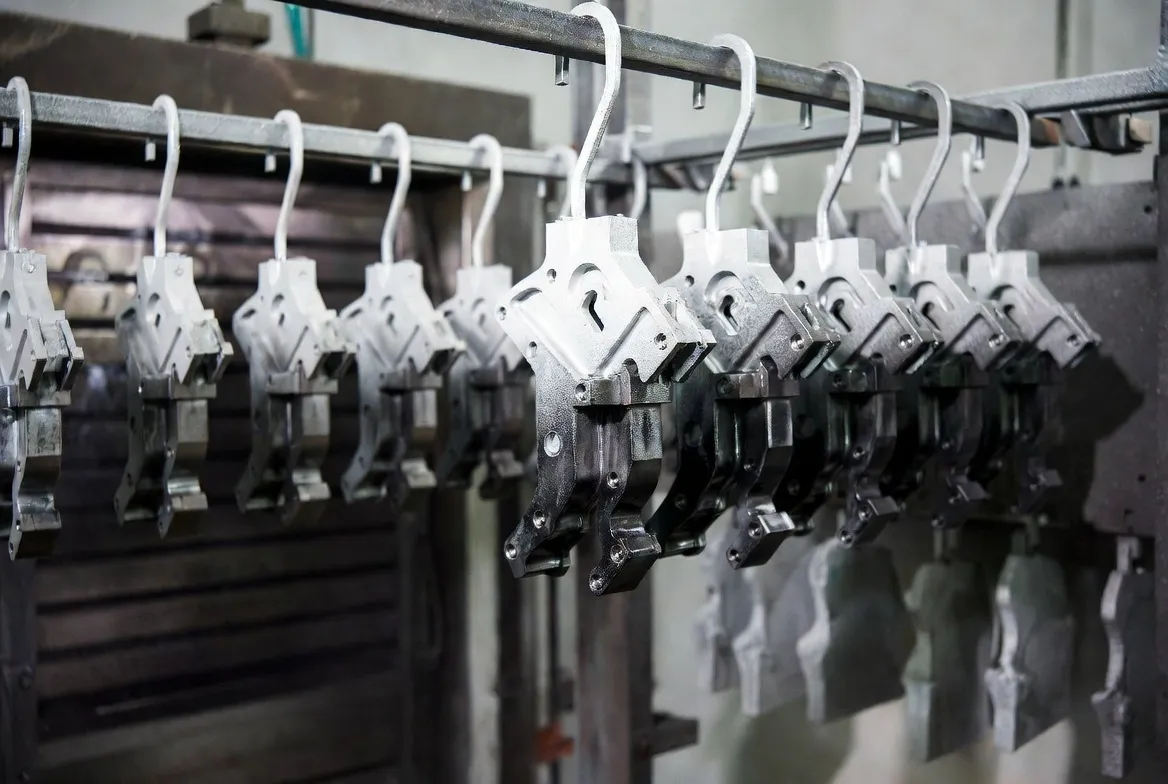
Powder coating is a dry finishing process in which finely ground particles of pigment and resin are electrostatically applied to a grounded workpiece. The coated part is then heated in a curing oven, causing the powder to melt, flow, and chemically cross-link into a smooth, durable film.
Unlike liquid paint, powder coating produces virtually no solvent emissions and typically achieves a thicker, more uniform coating in a single application. It is widely used on metal parts in automotive, industrial equipment, furniture, architecture, and consumer products for its combination of protection, appearance, and environmental advantages.
Advantages of Powder Coating
- Excellent durability and impact resistance
- Strong resistance to chipping, scratching, and abrasion
- Superior corrosion and weather resistance
- Wide range of colors, gloss levels, and textures
- Uniform coating thickness with minimal runs or sags
- Low VOC emissions and environmentally friendly
- Cost-effective for both prototype and production volumes
- Reduced long-term maintenance requirements
Powder Coating FAQs
Is powder coating better than traditional paint?
In most functional applications, yes. Powder coating is generally more durable, more resistant to chipping and fading, and provides a thicker, more uniform film with better corrosion protection than conventional liquid paint.
Is powder coating permanent?
It is highly durable and long-lasting, but not completely permanent. Prolonged exposure to UV radiation, aggressive chemicals, or severe mechanical impact can eventually cause degradation. Proper selection of powder type significantly extends service life.
Can I paint over powder coating?
It is generally not recommended. Powder-coated surfaces have low surface energy, which can lead to poor paint adhesion and eventual peeling. If a color change is required, stripping the existing coating and reapplying powder is usually the better solution.
Can powder coating be removed?
Yes. Common removal methods include chemical stripping and abrasive blasting. The chosen method should be compatible with the substrate to avoid damage, and refinishing is typically required afterward.
What materials can be powder coated?
Powder coating is most commonly applied to metals such as steel, aluminum, and their alloys. Some heat-resistant plastics and other materials can also be coated under specific process conditions.
Other Surface Finishing Processes
An electrochemical process that creates a durable, corrosion-resistant oxide layer on aluminum, enhancing hardness, wear resistance, and color options.
A surface finishing method that propels fine spherical media to clean, deburr, and create a uniform matte texture without significant material removal.
A chemical conversion coating that forms a thin black magnetite layer on ferrous metals, providing mild corrosion resistance and a non-reflective finish with minimal dimensional change.
A thin diamond-like carbon film applied via PVD or CVD that delivers exceptional hardness, ultra-low friction, and superior wear resistance.
An electrochemical process that removes a controlled layer of metal to produce a smooth, bright, and highly clean surface with improved corrosion resistance.
A controlled heating and cooling process used to modify the microstructure of metals, improving hardness, strength, toughness, and overall mechanical performance.
An electroplating process that deposits a uniform nickel layer to enhance corrosion resistance, wear protection, and surface appearance.
A vacuum-based thin-film deposition technique that produces hard, wear-resistant, and often decorative coatings with excellent adhesion and minimal thickness.
An electroplating process that applies a sacrificial zinc layer to steel and iron parts, offering cost-effective corrosion protection through galvanic action.