

416 stainless steel is one of the most popular free-machining grades in the martensitic stainless steel family. It was specifically developed to offer good corrosion resistance while dramatically improving machinability compared to standard grades like 304 or 316.
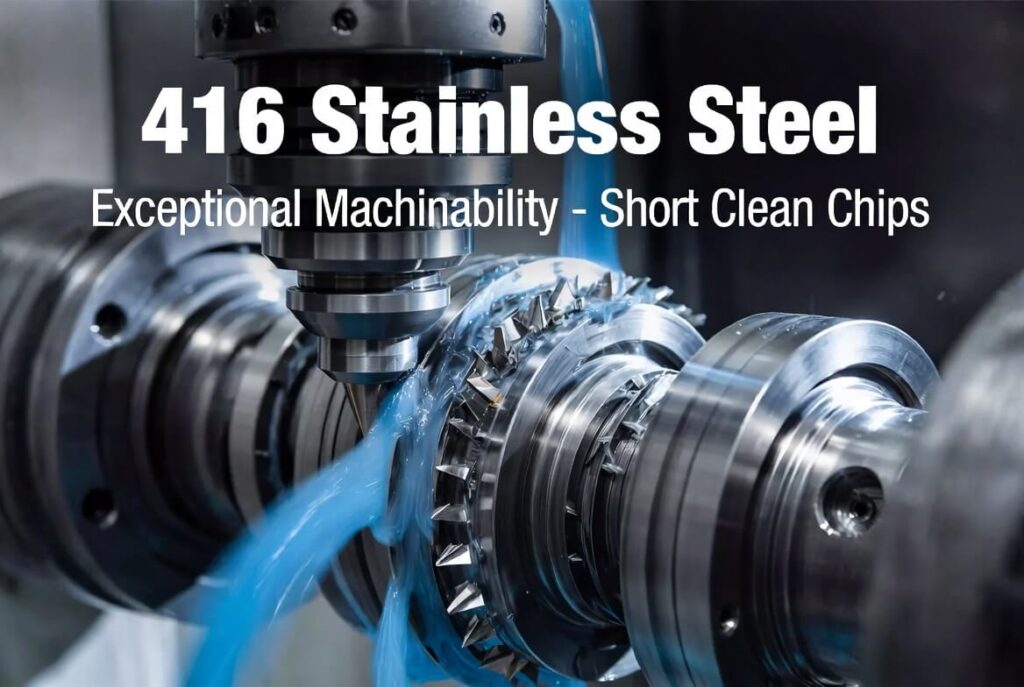
Thanks to the addition of sulfur, 416 stainless steel produces short, brittle chips during CNC machining, which reduces tool wear and allows significantly higher cutting speeds. This makes it a favorite choice for high-volume production of precision parts where machining efficiency is critical.
In this guide, we’ll explore the composition, key properties, heat treatment options, machinability advantages, and real-world applications of 416 stainless steel to help you decide if it’s the right material for your CNC projects.
[Suggested Image: CNC turning or milling of 416 stainless steel showing clean, short chips and smooth surface finish]
What Is 416 Stainless Steel?
416 is a martensitic stainless steel grade containing approximately 12–14% chromium and a deliberate addition of sulfur (0.15–0.35%). The sulfur forms manganese sulfide inclusions that act as chip breakers, making the material much easier to machine than most other stainless steels.
While it sacrifices some corrosion resistance and toughness compared to austenitic grades, 416 delivers an excellent balance between machinability, strength, and moderate corrosion protection — especially in mildly corrosive environments.
Chemical Composition
Here’s the typical chemical makeup of 416 stainless steel:
| Element | Percentage (%) |
| Carbon (C) | 0.15 max |
| Chromium (Cr) | 12.0 – 14.0 |
| Manganese (Mn) | 1.25 max |
| Phosphorus (P) | 0.06 max |
| Sulfur (S) | 0.15 – 0.35 |
| Silicon (Si) | 1.00 max |
| Iron (Fe) | Balance |
The controlled sulfur content is what gives 416 its outstanding free-machining characteristics.
Key Mechanical Properties
After heat treatment, 416 stainless steel can achieve good strength and hardness:
- Hardness: Up to 30–35 HRC in annealed condition; can reach 40+ HRC when hardened.
- Tensile Strength: 480–760 MPa (depending on heat treatment).
- Yield Strength: 275–550 MPa.
- Elongation: 10–25% (lower when hardened).
It offers better wear resistance than many austenitic grades while remaining easier to machine.
Heat Treatment and Processing
416 stainless steel responds well to heat treatment:
- Annealing: Performed at 815–900°C followed by slow cooling to improve machinability.
- Hardening: Austenitizing at 925–1010°C followed by oil quenching.
- Tempering: Done at 150–650°C to balance hardness and toughness.
For CNC machining, it is highly recommended to machine parts in the annealed condition first, then apply final heat treatment if higher hardness is required. This approach delivers the best tool life and surface finish.
Machinability – The Biggest Advantage
This is where 416 truly shines. It is widely regarded as one of the easiest stainless steels to machine:
- Produces short, broken chips instead of long, stringy ones.
- Allows higher cutting speeds and feeds compared to 304 or 316.
- Reduces built-up edge on tools and improves surface finish.
- Significantly lowers overall machining costs in high-volume production.
Many CNC shops report that 416 machines almost like a mild steel while still offering stainless steel benefits.
Pro Tip: Use sharp carbide tools with proper coolant. Even though it machines easily, maintaining correct parameters prevents work hardening and ensures consistent results.
[Suggested Image: Comparison of chip formation — long stringy chips from 304 stainless vs short, clean chips from 416 stainless]
Corrosion Resistance
416 provides moderate corrosion resistance — better than carbon steel but lower than 304 or 316 stainless steel. The added sulfur slightly reduces its ability to form a fully protective oxide layer.
It performs well in mild atmospheres, dry conditions, and many petroleum-based environments. For more aggressive corrosive conditions (marine, chemical, or food processing), 304 or 316 are usually better choices.
Common Applications in CNC Machining
416 stainless steel is frequently chosen for parts where machinability and moderate corrosion resistance are both important:
- Fasteners, bolts, and screws
- Valve components and pump shafts
- Gears, pinions, and couplings
- Motor shafts and precision fittings
- Firearm components and sporting goods parts
- Machined bushings and wear-resistant sleeves
It is especially popular in automotive, industrial machinery, and firearms manufacturing.
416 vs Other Stainless Steels
Here’s how 416 compares with common alternatives:
| Grade | Machinability | Corrosion Resistance | Strength/Hardness | Best For |
| 416 | Excellent | Moderate | Good | High-volume precision parts |
| 304 | Fair | Excellent | Moderate | Food, marine, general use |
| 316 | Fair | Superior | Moderate | Chemical, marine environments |
| 410 | Good | Moderate | Good | Lower cost, less critical parts |
When to choose 416: When machining speed and cost efficiency are priorities and the environment is not highly corrosive.
Advantages and Limitations
Advantages:
- Outstanding machinability among stainless steels
- Good strength and wear resistance
- Cost-effective for high-volume CNC production
- Can be hardened for improved performance
Limitations:
- Lower corrosion resistance than austenitic grades
- Reduced toughness and ductility compared to 304/316
- Not ideal for highly corrosive or food-contact applications without additional protection
Choosing 416 Stainless Steel for Your Project
Consider 416 when your CNC parts require:
- High machining efficiency and lower production costs
- Moderate corrosion resistance in non-aggressive environments
- Ability to be hardened for wear resistance
If superior corrosion resistance is critical, 304 or 316 may be worth the extra machining effort and material cost.
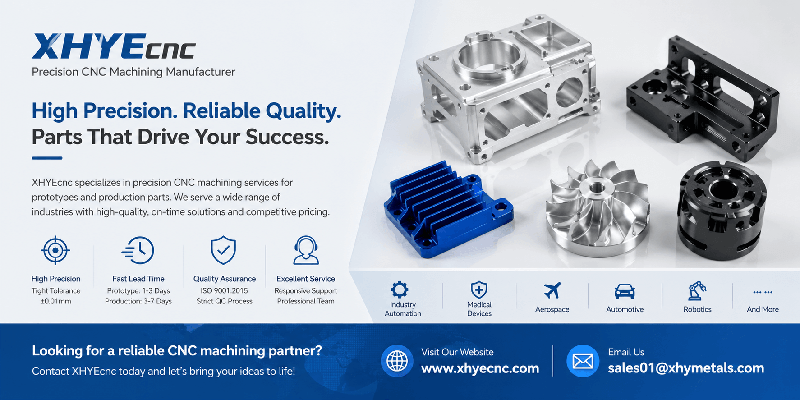
Ready to machine your parts in 416 stainless steel? Our CNC team has extensive experience with free-machining grades like 416. We provide expert material selection advice, optimized machining parameters, heat treatment services, and consistent high-quality results. Contact us today for a free quote or technical consultation. Let’s help you achieve efficient production and reliable performance.
FAQ
What makes 416 stainless steel easy to machine? The addition of sulfur creates manganese sulfide inclusions that act as chip breakers, resulting in short chips and reduced tool wear.
Is 416 stainless steel rust resistant? It offers moderate corrosion resistance — better than carbon steel but not as good as 304 or 316 stainless steel.
Can 416 stainless steel be hardened? Yes. It responds well to heat treatment and can reach higher hardness levels than most austenitic stainless steels.
When should I choose 416 over 304 stainless steel? Choose 416 when machining speed and cost are priorities and the operating environment is relatively mild. Choose 304 when superior corrosion resistance is required.
Is 416 stainless steel magnetic? Yes, like most martensitic stainless steels, 416 is magnetic in both annealed and hardened conditions.
Is 416 suitable for food contact applications? Generally not recommended for direct food contact due to moderate corrosion resistance. 304 or 316 are preferred for food-grade equipment.